How we use AI
We work with the people who build technology. We test new AI tools constantly and bring into projects the ones that strengthen the result.
The task, the direction and the final call are ours. AI speeds up production, widens the search and takes the weight off routine.
In every project AI has its own place: sometimes it helps assemble a system, sometimes it works as a tool for producing graphics.

Design system and UI kit for Redgevity Master
We broke the device’s logic down into components, states and rules, then wrote a production playbook for the AI that hands it the tokens, the component logic and the intent behind them. The client’s team develops with AI assistance, so a new location, role or programme now comes out as a composition inside the system instead of a screen drawn from scratch.
A brand system for theScreener, legible to people and to AI
For a Swiss FinTech trusted by institutions for 25 years, we built an identity that holds expertise, positioning and visual language together across every touchpoint. Branding is now read by AI systems as well as people, so we engineered the design system as a shared operating language for both: unambiguous tokens, components and rules that keep AI-assisted content production consistent as it scales.

A realistic video and photo style for WHOOP Your Calendar, our independent concept
The whole campaign was AI-generated. We generated the recurring heroine in ChatGPT, built her into compositions in Nano Banana, animated the scenes in Kling, and finished light and retouching by hand. The process ran closer to a real shoot than it sounds: up to twenty takes on a single scene, choosing the best, grading out the magenta, until nothing in the frame gives the AI away.
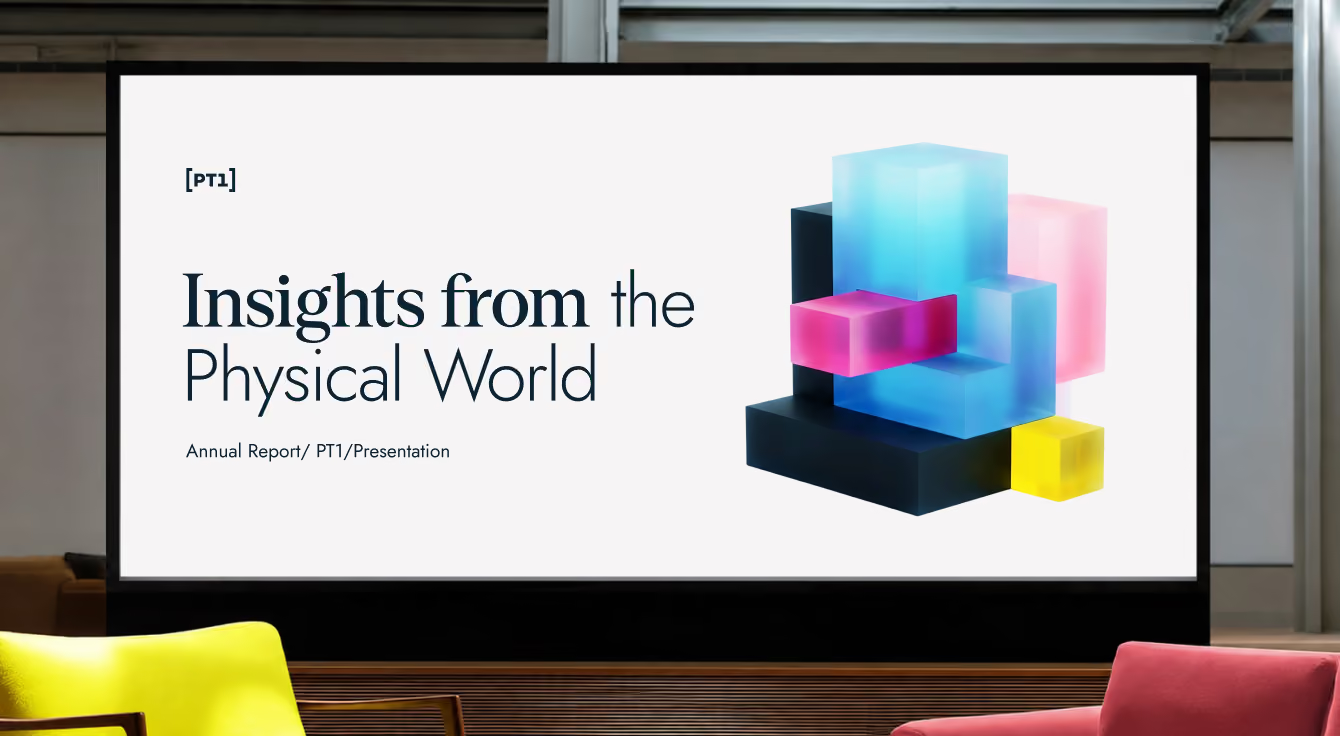
AI-assisted graphics for PT1: stills and motion
We developed the graphic language for a venture fund’s identity, in stills and in motion. Once the direction was set, AI carried the production, generating variations and scaling one system across the annual report, presentations and animation. The selection and the final polish stayed with the designers.
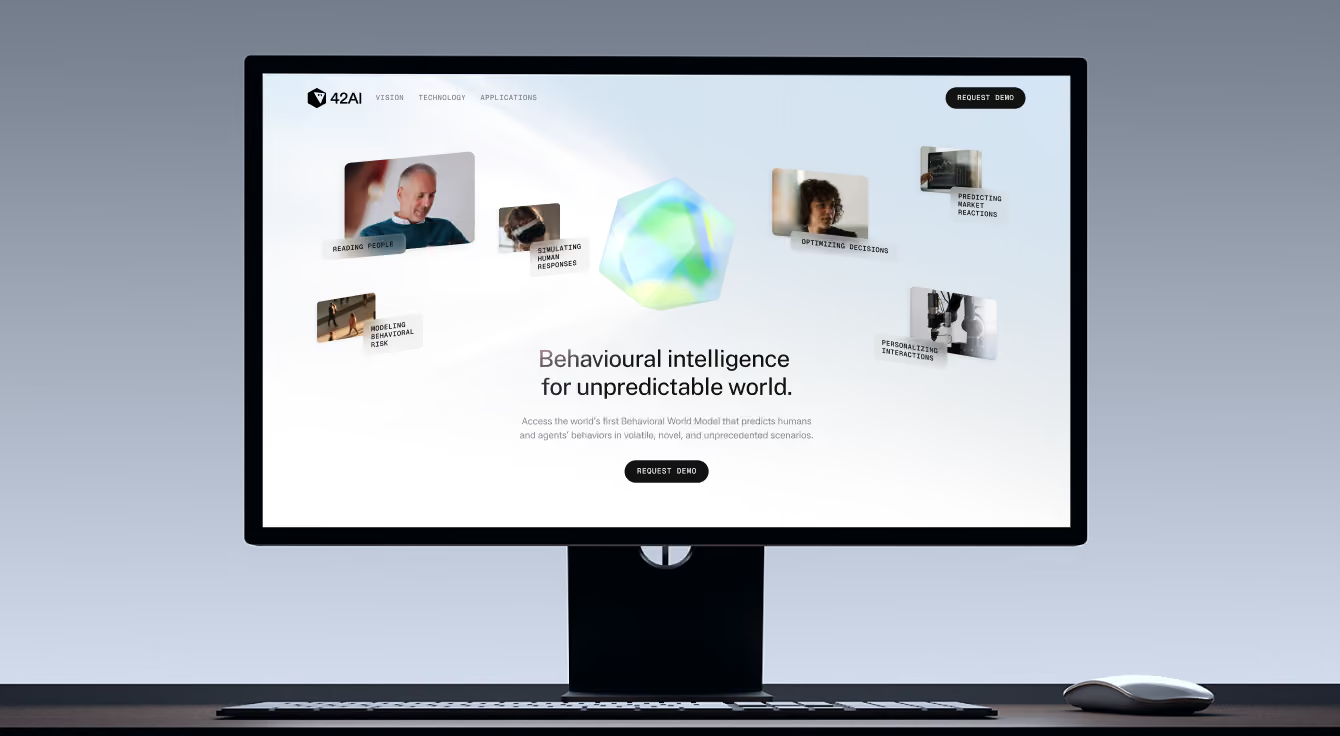
A crystal metaphor for 42AI, explored and animated with AI
A tesseract crystal as a metaphor for hidden rules of behaviour: glowing facets, refracted light, a prediction assembling itself out of data. AI helped us explore the variants and see the movement before production started. We animated it from scratch and built one visual language that explains how the 42AI model works at every level.
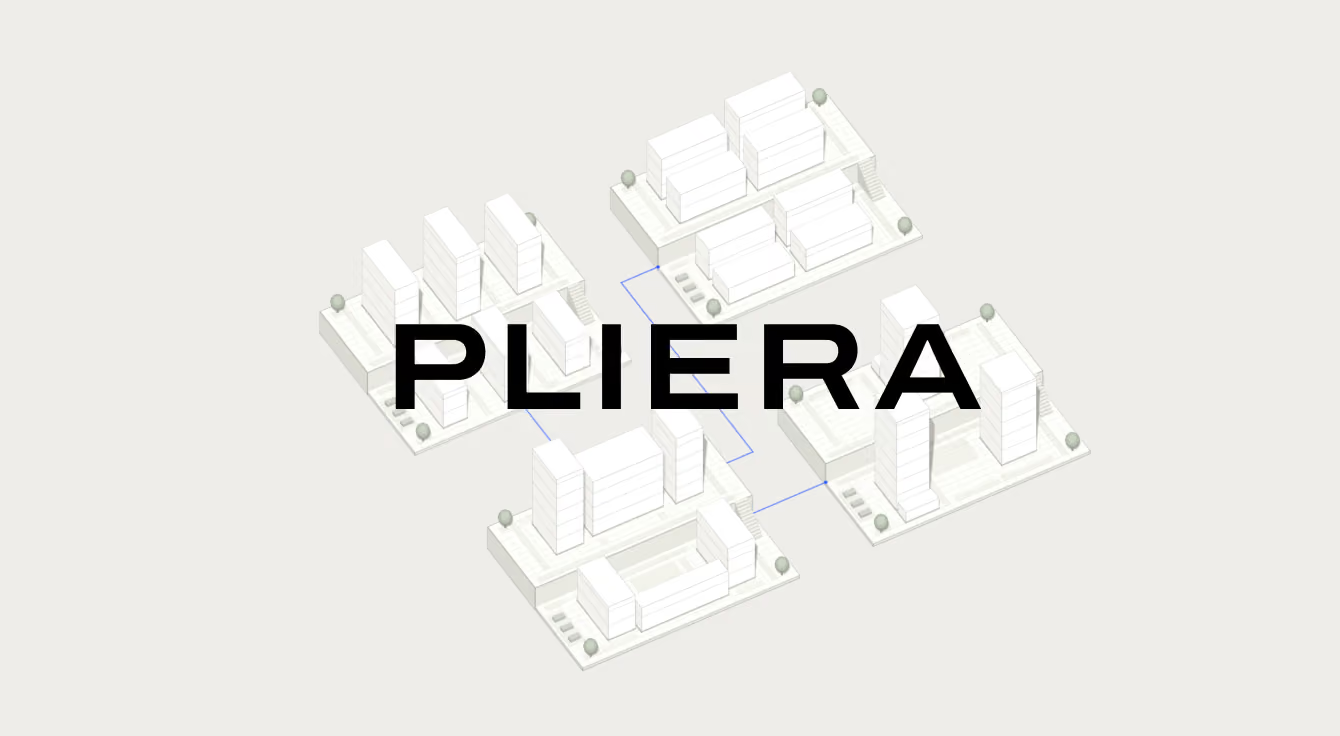
A website and a custom animation editor, coded with AI, for Pliera
The idea of living lines grew out of the brand name: postlinear era. We drew the screens in Figma and moved them to the web through Codex, and for the building animation we built a small editor of our own, written with AI assistance, with controls for camera, speed and detail.
The depth of AI’s involvement is set by the brief and the task
Research
We process large volumes of client material: interview and discovery-call recordings, industry reports, competitor sites. The tools help cover more sources and group what they find. What actually matters is decided by the team.
Strategy
We structure workshop and interview material, draft research questions, check our formulations against global practice, iterate and proofread. Positioning, brand architecture and narrative are formulated by the team.
Branding
Speeds up moodboards and proto-concepts, so a direction can be tested before it is worked out in depth. Helps prepare graphic variations and put identity documentation together. The concept, the metaphor and the final visual language are created by the team.
Web design
Speeds up visual directions and component assembly, helps build an interactive prototype to test an idea, and finds discrepancies between mockups and the design system. Structure, composition and the final interface decisions are made by the team.
3D and animation
Speeds up storyboards and animatics, so movement can be seen before production. Helps bring static graphics to life and check quickly how they behave in motion. Final quality is brought up by the designers.
Production
Supports production of graphics and video, static and animated, storyboarding and pre-visualisation, and scaling material across a finished system. Selection and final polish are done by the team.
Development
We generate code and markup, debug, build integrations and Figma plugins, and automate routine operations. Solution architecture is designed and reviewed by a developer.
Handover
We generate code and markup, debug, build integrations and Figma plugins, and automate routine operations. Solution architecture is designed and reviewed by a developer.
From brief to launch — questions we hear most
What does AI do in a project, and what does the team do?
AI widens and accelerates. It covers more sources in research, produces more directions at the start, generates variations once a direction is set, and takes the routine out of production and code. What it does not do is decide. The problem a project solves, the positioning, the concept, the visual language and the final quality are all judgements made by people, and we own them. There is a full breakdown by stage above: for each phase of work it says what the tools carry and where the decision stays with us.
Does our material go into the models?
We work on paid business plans where inputs are not used to train the models, and we check that setting for every tool we add to the stack. Anything under NDA stays inside the tools we have agreed with you, and sensitive material (personal data, client lists, contracts, credentials) does not go into generative tools at all. If your security or compliance team has its own requirements, send them to us before we start and we will work to them, or tell you plainly which part of the process would have to change.
Can I opt out of AI on my project?
Yes. We can run a project without generative tools, or keep them out of specific assets, for example anything customer-facing or anything your legal team needs clean. It changes the timeline rather than the outcome: some stages take longer, and we will tell you which and by how much before we start, so the decision is made with the real trade-off in front of you, not after the fact.
How do you decide where AI belongs and where it doesn’t?
One test: does this step need coverage or judgement? Where the job is to get through volume (sources, variations, storyboards, repetitive code), the tools help and we use them. Where the job is to decide what something means and what it should look like, a person does it. The line sits in roughly the same place on every project, and where a client’s rules or the nature of the material move it, we say so at the start rather than mid-way.
How do you keep the work from looking AI-made?
By treating generated material as raw footage, not as output. On the WHOOP campaign a single scene took up to twenty takes before one was right, and everything that survived was graded, retouched and detailed by hand. There are specific habits behind it: correcting the magenta cast that generators push, regenerating a failed detail separately in 4K and merging it in, keeping clips short enough to control. The reason the work does not look generic, though, is earlier than any of that. The concept and the visual language are ours, so the tools are executing a direction they could not have arrived at.
Who owns the result, and can AI output infringe someone’s rights?
The rights to the final work are yours, as they would be on any project. On our side, AI is a tool inside the process, not a way around authorship. References and moodboards set direction and are never reproduced. We do not prompt in the style of a living artist, and we keep other brands, characters and recognisable people out of generated material: the heroine in our WHOOP campaign is a synthetic character, not anyone’s likeness. Everything generated is reworked, composed and finished by hand before it becomes a deliverable.
Does AI make the project faster and cheaper?
Faster, yes, and in specific places: research, early exploration, production of series, routine code. Cheaper is less straightforward. The time saved on volume goes back into selection, correction and finishing, which is where quality is actually decided. What you get for the same budget is more explored before a direction is chosen, and more produced once it is, rather than a smaller invoice for the same work.
Let’s discuss your project!
Ping us however you want, even if you don’t have a brief
